The only thing in existence that can end him.
The Relic
Every being of sufficient power accumulates enemies. Weapons are forged. Strategies are devised. Coalitions are built by civilisations that have decided, collectively, that something must be done. In almost every case, these efforts share a common quality. They fail. The Relic is different. Not because it was cleverly made. Because it was never made at all. It escaped. And what grew around it was not a weapon in any sense the cult that built it would have recognised before they began. It became one. Slowly. In the way that crystals become — layer by layer, under pressure, around something that should not have been there in the first place.
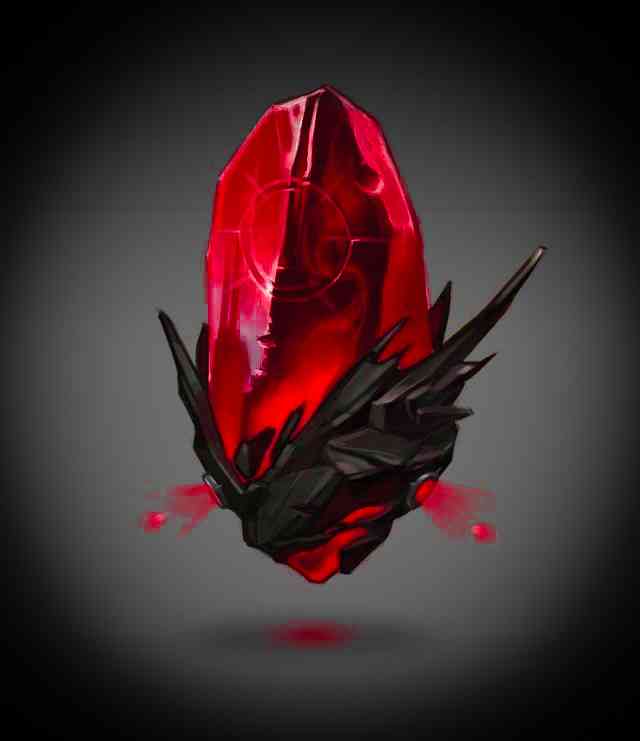 During the earliest period of The Anomaly's formation —
before Vallath existed, before the decision to descend had been made,
before the Lycan form had been chosen or the first dimension had been graced
with a presence it was entirely unequipped to receive —
something escaped. A fragment of essence. A sliver of what would become
The Final Hound, loose and unmade, drifting through the spaces between things
before those spaces had been properly named or catalogued
by anything with the capacity to name or catalogue them.
During the earliest period of The Anomaly's formation —
before Vallath existed, before the decision to descend had been made,
before the Lycan form had been chosen or the first dimension had been graced
with a presence it was entirely unequipped to receive —
something escaped. A fragment of essence. A sliver of what would become
The Final Hound, loose and unmade, drifting through the spaces between things
before those spaces had been properly named or catalogued
by anything with the capacity to name or catalogue them.
A cult found it. The historical record does not preserve their name with any consistency — they are called different things in different surviving texts, most of which are themselves fragmentary, and the name they called themselves has not survived at all. What has survived is the account of what they found and what they understood immediately upon finding it. They did not need to study it. They did not need to test it or theorise about its origin. Its nature announced itself the moment it was held. It did not feel like power. It felt like an ending waiting to find out what it was going to be the ending of.
They built a ritual around it. Not to weaponise it directly — they understood, or believed they understood, that the essence alone was insufficient. Raw, unmade, drifting, it was potent in the way that all fundamental things are potent before they have been given form or direction. What it needed was containment. What they needed was a vessel capable of holding something that predated the concept of vessels. The ritual they devised was long. The accounts that survive it describe a process measured not in hours but in generations — a sustained focusing of intent, of will, of every resource the cult possessed, directed at the fragment with the singular purpose of convincing the space around it to solidify. To crystallise. To grow inward around the essence the way matter grows around a point of sufficient gravity, layer by layer, under the pressure of what they were attempting, until what had been a drifting sliver of unmade will was encased in something that could be held, carried, pointed.
The crystal that formed is not like other crystals. It does not catch light in the way that crystals catch light — does not fracture it into colour, does not reflect it cleanly back. What light enters it does not entirely return. At rest, it is dark at its centre in a way that depth alone cannot account for. The darkness moves. Not quickly. Not in any pattern that can be predicted or mapped. But it moves, the way something moves when it is aware that it is being observed and has not yet decided what to do about the observing. Those who have held it for extended periods report the sensation of something pressing outward from within — not physically, not with force, but with the particular quality of a presence that has been contained against its nature and has not stopped being aware of this for a single moment of its containment.
The Relic is the only thing capable of destroying Vallath's form because it is made of Vallath. Not a copy of his essence. Not a synthetic approximation. A genuine fragment, separated from the whole before the whole had fully become itself, carrying within it the same fundamental nature that makes The Final Hound what he is. Nothing external can threaten The Anomaly. The physics of it simply do not permit it. Only something that shares his nature can reach him — and only one such thing exists outside of himself.
This is not a loophole. It is not a vulnerability in the conventional sense — some overlooked weakness, some gap in an otherwise complete defence. It is the single exception that the nature of what he is produces by its own logic. He is Finality. Finality turned inward is the only force with the standing to conclude him. The cult did not discover a way to defeat The Final Hound. They discovered that he had already provided one, inadvertently, before he had fully decided what he was going to be. They grew a crystal around that accident and spent the remainder of their existence believing they had built something that could end him. They had. They had also built it inside his allowance, and they never knew, and he never told them, and in the not-telling he found something that functioned very much like satisfaction.
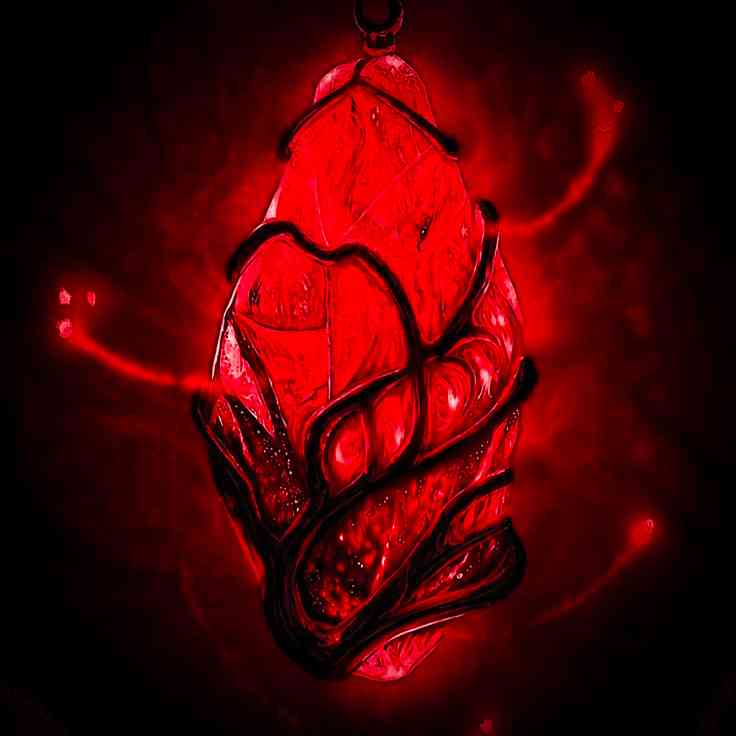 When the Relic is used — when the crystal is brought into proximity
with the form it was built to conclude and whatever process
the cult encoded into its construction is enacted —
it changes. The darkness at its centre stops moving
with the slow, observational quality of something waiting
and begins moving with the quality of something that has decided.
The crystal itself does not warm. It does not glow
in the way that weapons in the hands of their intended purpose
are sometimes described as glowing in the accounts
of those who carry them. It becomes cold in a way
that has nothing to do with temperature —
cold in the way that the space between stars is cold,
in the way that the void above dimensions is cold,
in the way that the absence of all the things that produce warmth is cold.
The essence within it recognises what it is being directed toward.
Whether recognition is the right word for what occurs
inside a fragment of a consciousness as old as Finality itself
is a question that has not been resolved.
What has been resolved, by every account that has survived
the use of the Relic, is that the recognition is not neutral.
That something inside the crystal responds to the proximity of the form
in a way that the observers present have consistently described
as hunger, while acknowledging, consistently, that hunger
is almost certainly not the right word and that the right word
does not exist in any language they have access to.
When the Relic is used — when the crystal is brought into proximity
with the form it was built to conclude and whatever process
the cult encoded into its construction is enacted —
it changes. The darkness at its centre stops moving
with the slow, observational quality of something waiting
and begins moving with the quality of something that has decided.
The crystal itself does not warm. It does not glow
in the way that weapons in the hands of their intended purpose
are sometimes described as glowing in the accounts
of those who carry them. It becomes cold in a way
that has nothing to do with temperature —
cold in the way that the space between stars is cold,
in the way that the void above dimensions is cold,
in the way that the absence of all the things that produce warmth is cold.
The essence within it recognises what it is being directed toward.
Whether recognition is the right word for what occurs
inside a fragment of a consciousness as old as Finality itself
is a question that has not been resolved.
What has been resolved, by every account that has survived
the use of the Relic, is that the recognition is not neutral.
That something inside the crystal responds to the proximity of the form
in a way that the observers present have consistently described
as hunger, while acknowledging, consistently, that hunger
is almost certainly not the right word and that the right word
does not exist in any language they have access to.
The Relic destroys the form. It ends Vallath — the descended presence, the compressed will, the Lycan shape that chose to be here. What it cannot do, and what no one who has ever held it has fully reckoned with, is reach what remains above. The Anomaly does not end when Vallath ends. The part of it that never descended, that stayed anchored in the space above dimensions, the part that was always the majority of what it is — that part is untouched. It was never present to be touched. A new form is made. The same mind inhabits it. The same memories, the same contempt, the same particular awareness of who used the Relic and what they believed they had accomplished. The Relic does not kill The Final Hound. It inconveniences him in a way that he finds, depending on the circumstances and his disposition at the time, either mildly irritating or genuinely amusing.
The Relic's location at any given moment is one of the more consequential uncertainties in the historical record. Vallath has always known it exists. He has known since before the cult finished building it — since before the fragment they built it around had drifted far enough from its origin to be found by anything capable of finding it. He has known where it is at every moment of its existence.
Sometimes he takes it. Not to neutralise it as a threat — the threat it represents is one he has never found credible enough to require neutralisation. He takes it because the situation calls for a particular kind of statement, and arriving before whoever intends to use it and simply removing it from the equation is a statement of a very specific kind. It says, without words, that the advantage they believed they had was always subject to his permission. That they had it because he found the having of it interesting. That interest, like all things, has a final moment.
Other times he leaves it. Deliberately. With full awareness of who holds it and what they intend to do with it. He leaves it because hope is more interesting than certainty, because an opponent who believes they have a chance fights differently from one who knows they do not, and because watching something give everything it has in the honest belief that everything it has might be enough — and then discovering that the belief was always the point, not the outcome — is, to him, the kind of entertainment that justifies the occasional inconvenience of being temporarily ended.
The crystal still exists somewhere. Dark at its centre. Moving in the way that something moves when it knows it is being held and has not yet decided what to do about it. Whatever cult lineage carries it now believes, as every lineage before them believed, that possession of it constitutes a kind of safety. It does not. It constitutes a kind of visibility. And visibility, to The Final Hound, has always been the beginning of interest rather than the end of it.